https://en.wikipedia.org/wiki/Serbian_Progressive_Party
Radical new energy barely slowed by the anti-radiostar Deep State.
https://en.wikipedia.org/wiki/Serbian_Progressive_Party
Radical new energy barely slowed by the anti-radiostar Deep State.
Ideas about the long-term trajectories of human civilization have typically put humanity’s future under a few scenarios. The philosopher Nick Bostrom outlines the four families of future scenarios as: extinction, recurrent collapse, plateau, and posthumanity. A more recent study by a cross-disciplinary group of researchers instead formalizes the broad classes of trajectories as status quo, catastrophe, technological transformation, and astronomical transformation (‘Long-Term Trajectories of Human Civilization’, 2019). And in his book Future Stories (2022), David Christian labels the four global scenarios of our imagined futures as collapse, downsizing, sustainability, and growth.
There are some conclusions we can draw from these studies. The first is that a status quo or plateau, in which the level of technological development of humanity will remain confined within a narrow range, appears implausible. Civilization seems more likely to either go extinct, for the simple reason that the cumulative probability for that increases over time, or else continually transform. But note that our survival into the far future through transformative technology or expansion across the cosmos is by no means guaranteed. Major extinction events in Earth’s history, coupled with our ability to cause serious environmental self-harms, suggests a catastrophic trajectory is more likely. In fact, humanity is already at a technological level where we are capable of total self-destruction, whether through nuclear war, artificial intelligence, or otherwise. We are still far from being a technologically and ethically mature civilization whose members could live extremely long and fulfilling lives through biological modification, or engage in widespread space colonization.
To make matters worse, scientific (as opposed to technological) inertia has been a defining feature of our society since the mid-twentieth century. Indeed, a recent paper published in Nature: ‘Papers and Patents are Becoming Less Disruptive Over Time’, noted a marked decline in paradigm-changing science over the last sixty years compared with the preceding decades. This is in part due to scientists’ increasingly narrow focus within their own fields, lacking broader ambitions to advance science more generally. As pointed out by the likes of Peter Thiel and the science fiction writer Cixin Liu, recent advances in computing and information technology merely create an illusion of rapid progress: they make our society work more efficiently, but do not transform the material or energy basis of civilization itself. But we must not grow complacent. For the very first time in Earth’s history, humanity has developed the technological capability to manage its circumstances on a planetary scale, be it atmospheric compositions or geographic features. Christian terms this new complex entity “a managed or conscious planet.”
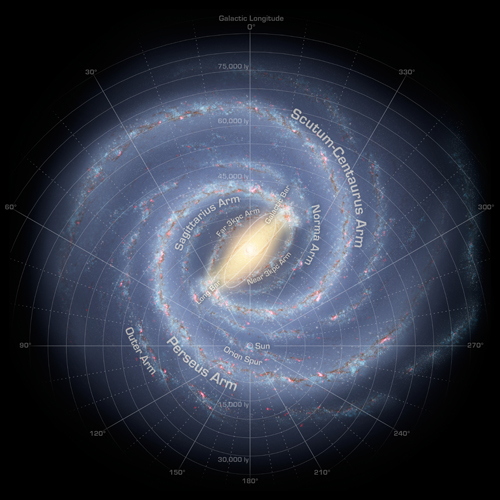
The Nobel Prize winning physicist Enrico Fermi famously asked why we aren’t detecting any signals from alien civilizations anywhere in our immense galaxy, despite the apparently high probability of their existence. Or as he put it, “Where is everybody?” One possible explanation, known as the ‘Great Filter’, is that civilizations capable of making such transmissions are basically unstable and short lived, as they tend to destroy themselves before they can spread from their home planets. If our own civilisation can become truly spacefaring, it will escape this Great Filter. To develop the technology and the fundamental science required for that, we need a transcendent goal capable of motivating society for decades, if not centuries.
The history of our species is a history of the ever-expanding scope of intelligence across space and time, as we populated the Earth and lived increasingly longer lives. It is therefore only natural that we build upon this legacy. Let’s be bold in our ambitions: to expand across the cosmos and transcend death! Only through such ambitions can we ignite the social forces that can channel enough resources to make the technological breakthroughs required to accomplish the goal of turning humanity spacefaring.
People will need to see human life in a cosmic context that it can be attained through science and technology. We already have the ideals needed for this. In the early 21st century, American sociologist William Bainbridge proposed the creation of a galactic religion, the Cosmic Order, around the premise that the heavens (that is, space) are a sacred realm that we should enter in order to transcend death. (‘Religion for a Galactic Civilization 2.0’, 2009). Such views have earlier roots in Cosmism, a Russian philosophical and spiritual movement from the turn of the twentieth century. Seeking to extend humanity’s reach beyond current limitations using science, the Cosmist movement inspired the Soviet space program, and also led directly to contemporary transhumanism. Konstantin Tsiolkovsky (1857-1935), a follower of Cosmism and a founding father of astronautics, famously said that “The Earth is the cradle of humanity, but mankind cannot stay in the cradle forever.”
Tsiolkovsky’s mentor, the Christian philosopher Nikolai Fedorov (1829-1903), conceptualized Cosmism in his Philosophy of the Common Task. Fedorov firmly believed that the ideal of science and progress is to study “the blind force that brings hunger, disease and death in order to transform it into a life-giving force.” Just so, the ‘common task’ is to create the technological and political conditions to resurrect everyone who’s ever lived, so that past and future generations are reconciled and united. On this view, secular technology is seen as a messianic force to overcome death and fulfill the religious promise of universal salvation. However, this technology must overcome not only the temporal limitations of death, but also spatial limitations. Resurrected humanity could not all fit on Earth (it’s estimated that more than a hundred billion Homo sapiens have lived), and so the celestial expanse will have to be where they eventually settle. “By resurrecting all the generations who have lived on this Earth, consciousness will be disseminated to all the worlds of the Universe,” Fedorov writes.
Alexander Svyatogor (1889-1937) a later Cosmist, and key representative of the 1930s Russian political movement Biocosmists-Immortalists, took one step further, and evolved the goal of resurrection to that of realizing personal immortality. In his 1922 manifesto, The Doctrine of the Fathers and Anarchism-Biocosmism, he outlines the ambition to conquer both time and space: “The struggle for individual immortality – for life in the cosmos – manifests the universal will.”
Fedorov ponders the social organization required to achieve the Cosmist vision. Since science and technology play a key role in achieving resurrection, and it is to be universal, participation in the research must embrace everyone. Only in this way can the division between the learned and unlearned be bridged and universal kinship feelings restored.
A belief in universal participation in science has parallels in today’s ‘decentralized science’ movement, also known as DeSci. DeSci promotes the social organization that Fedorov envisioned as being worthy of the hopes of reinvigorating scientific progress. Today’s academic establishment is ossifying with a ‘publish or perish’ culture that prioritizes quantity of publications over quality. Furthermore, the contemporary scientific peer review system is plagued with opacity and inefficiency, resulting in limited data availability or transparency that hampers crucial replications of experiments. By contrast, DeSci initiatives would utilize blockchain technology to implement Decentralized Autonomous Organizations (DAOs) that allow the more democratic participation of a broader base of scientists and investors. More high-risk, high-reward, or unconventional research can be supported under open-access and transparency principles. DAOs that focus on fields ranging from longevity science to space exploration have already been formed.
The emergence of decentralized scientific institutions is part of the ‘network state’ movement pioneered by entrepreneur and investor Balaji Srinivasan. A network state is an online community with a capacity for collective action that crowdfunds research. Balaji wants to use it to reopen physical frontiers on Earth and rekindle the frontier spirit. But we can set our sights on ultimate frontiers: colonizing space and overcoming death.
The longevity field provides the perfect example of how DeSci could inject fresh and disruptive ideas into science. Over the course of the twentieth century, human life expectancy rose by decades thanks to advances in public health and medicine. However, the statistics make clear that we are now reaching the limit of existing approaches, and that further human life extension is implausible if we stay on the current course.
In its Longevity Acceleration Roadmap, the Longevity Biotech Fellowship (LBF) outlines three strategies to reach indefinite lifespan. The first two are full body replacement and advanced bioengineering against aging. The third – the backup plan – is called biostasis. Biostasis is about pausing aging indefinitely via cryopreserving (freezing) a human, offering the potential for revival in the future. According to the LBF, the total cost for a successful cryopreservation and revival research project might be around $2.4 billion. However, this is relatively little compared to the research budget of the pharmaceutical industry, and even much smaller amounts of funding could achieve significant advancements in the field. In this context, DeSci is well placed to attract unconventional funding and talent to achieve breakthroughs in this field which, if realized, can radically extend human lifespans. CryoDAO, a decentralized science collective advancing cryopreservation research, of which I am a Fellow, is at the forefront of biostasis. Its objective is to contribute to cryopreservation research projects that have a high potential to increase the capabilities of cryopreservation.
There are numerous challenges to cryopreservation, including tissue preservation techniques, methods to evaluate the quality of preservation, and (future) revival technologies. The good news is that these are mostly engineering problems, and we already have a preliminary roadmap with well defined objectives and key technical milestones to successful preservation and revival. One project aims to use molecular profiling and machine learning to discover safer and more effective cryoprotectants – the chemical compounds used to allow biological tissues to enter extremely low temperatures without ice crystal formation (vitrification), thereby maintaining the cellular structure. Another project hopes to achieve the world’s first live birth from a vitrified and replanted ovary in a sheep. This would demonstrate the viability of recovering complex organs from low-temperature storage. CryoDAO aims to demonstrate the first-ever cryopreservation and revival of a small mammal – a rat. Whole-body resuscitations have not been attempted since the 1960s.
All this illustrates how scientific progress might be reinvigorated to provide benefits to humanity, even in the short term. For example, advancing cryopreservation methods may improve organ and tissue banking capability, which would not only immediately benefit many thousands of people worldwide by increasing access to transplantation, but also improve tissue engineering, trauma medicine, and biomedical research, including the discovery, development, and evaluation of drugs. Tying it back to Cosmism, cryopreservation can also help achieve the other plank of that philosophy – interstellar exploration. Long-duration space travel faces challenges such as storing resources for life, exposure to radiation and zero gravity, and psychological stresses. Cryopreservation could render these factors negligible.
The Second Law of Thermodynamics posits that the total entropy of the universe is ever increasing, everything marching relentlessly toward disorder. Nevertheless, pockets of order emerge along the way. In his book Until the End of Time (2020), physicist Brian Greene provides a lucid account of how gravitational and nuclear forces work hand in hand to give birth to orderly structures like stars and galaxies, creating low-entropy pockets. Photons released from our star are exploited for the processes of life. The meaning of existence therefore is to battle against the steady march toward disorder that characterizes the universe, and preserve the pockets of order and low-entropy we call life. This could be made possible for us by cryopreservation technology. If we can, upon freezing, preserve the structures of the brain in such a way that an individual’s memories, personality, and identity are retained, we may one day be able to revive a frozen human. This is akin to the technology of preservation described by Fedorov in his essay The Museum, Its Meaning and Mission (1880). In his vision, all people should be preserved in museums and resurrected by future generations. As he writes, “transferring all the remains of life to the museum was a transfer to a higher order, to a domain of investigation, to the hands of descendants, to one or several generations.”
This all leads naturally to thoughts of intergenerational justice, looking both backward and forward. As pointed out by the philosopher Boris Groys, Fedorov’s project of resurrecting the dead is directed toward the past, as it means that previous generations will no longer be excluded from the better society of the future. A fatal caveat to Federov’s vision, however, is that revival is technically impossible if the brain is not properly preserved. The resurrection of all previous generations from less advanced eras would therefore be impossible. A more hopeful prospect is to direct our attention toward the future, aiming to preserve today’s individuals ‘informationally intact’, and resurrect them using future technologies. However, in Bainbridge’s proposed religion of the Cosmic Order, a person is only worthy of being resurrected if they have contributed to the development of the Cosmic Order. Individuals with extraordinary contributions will earn the right to live several lives, possibly on different planets, resulting in the spreading of advanced minds across the galaxy by ‘arrival of the fittest’. In this way, “each generation has a moral compact with the ones that follow”: those alive today will not be exploited in favor of those who will live later, as future generations will resurrect previous generations in the hope that those who come after them will do the same for them.
Interstellar immortality will vastly deepen and enrich the human experience. We need not be afraid of a life lived indefinitely. In Jorges Luis Borges’ short story ‘The Immortal’, the infinity of time has stultified and ossified the lives of the eternals, as “every act (and every thought) is the echo of others that preceded it in the past.” In the cosmic context, however, one can live one’s new lives on new worlds, and indefinitely gain an ampler and richer experience and personality. In an influential paper called ‘Time Without End: Physics and Biology in an Open Universe’ (1979), theoretical physicist Freeman Dyson provided a mathematical proof of how an open universe will provide a constantly expanding domain of consciousness. No matter how far we go into the future, there will always be new things happening and new worlds to explore. If this is correct, we must press forward with expanding human consciousness across space and time.
Now is the time for us to be bold in our ambitions. Guided by Cosmism, we should aim to extend humanity’s spatial and temporal reach before a catastrophic trajectory sets in. To borrow a quote from philosopher and science fiction writer Olaf Stapledon’s Interplanetary Man (1948), “there is a race between cosmical fulfilment and cosmical death, between the complete awakening of consciousness in the cosmos, and eternal sleep.” Yet as the biocosmist poet Olga Lor wrote over a century ago:
Into death I plunge the spirit of a knife,
Something to blow open the darkness of the grave.
The god of death is a disgusting god
Overthrown by the hand of reason!
(Biocosmist Poems)
© Andy Yee 2026
Andy Yee is a public affairs executive with experience in the financial services and technology sectors.
BUT NOT FOR THEE! Such grossly sectarian hypocrisy for all Marxist morons.
https://groups.io/g/marxmail/message/43914
Cryptoanarchy will abolish the working class even faster than capitalism.
Communism? That crap is now like string theory - not even wrong.
Israel's Integrity Party leader: Netanyahu's virtual currency vision poses a threat to national security
PANews, October 25: According to CCTV International News, Israeli Prime Minister Netanyahu's rival in the country's election and Integrity Party leader . . ."
Hyperliquid Co-Founder Jeff Yan: Platform Is Closer to Linux Than a Crypto Exchange
TLDR: Jeff Yan said at DAS Asia 2026 that Hyperliquid should not be seen as a rival to any one exchange. Yan compared Hyperliquid to the internet and linux.
They could all be saying this soon.
" But I WAS ALWAYS WITH YOU! "
NOSTR is NOT dead
The question isn't "how many people are posting notes on Damus or Primal right now?" — it's "what is being built on top of this protocol?"
And the answer is: a surprising amount.
The protocol is maturing from "decentralized Twitter" into a general-purpose coordination and identity layer. The social media use case (kind 1 notes) is just one application among many now.
The protocol is diversifying vertically into infrastructure. The pattern is:
Identity layer: Your NOSTR keypair is your sovereign identity across all applications — social, commerce, development, AI, etc. No platform owns it.
Event fabric: Signed, relayed events become the transport for everything — not just notes, but marketplace orders, git commits, AI requests, etc.
Payment rails: Lightning and Cashu integration is native, not bolted on. Value transfer is a first-class protocol action.
The critique about small user numbers misses that NOSTR is following a trajectory closer to TCP/IP or SMTP than to Instagram. These protocols weren't judged by "daily active users" — they were judged by what got built on top of them. Email was an application that emerged from a protocol.
The architecture is sovereignty-preserving by design, instead of by policy.
Cypherpunks write code; and it was never so easy as it is right now.
" Chief Inspector Louis. Victor Lazlo has been elevating a small number of dead Strasser types to compare with der Fuhrer and Il Duce as if they were representative fascists".
I'm shocked, Major Strasser. Shocked! The usual hallucinating moron suspects will be rounded up at once!
https://theanarchistlibrary.org/library/errico-malatesta-individualism-and-communism-in-anarchism
And, now that the anarchists are in a ferment over preparations for the future, it is worthwhile to re-examine the question calmly and without preconceptions.
I shall do so briefly from my point of view as a communist or associationist; others will do so, should they wish, from the individualist point of view.
(I use the word ‘associationist’ as an alternative to the word ‘communist,’ not because I like pointless new jargon, but because I foresee the possibility that the communist anarchists will gradually abandon the term ‘communist’; it is growing in ambivalence and falling into disrepute as a result of Russian ‘communist’ despotism. If the term is eventually abandoned this will be a repetition of what happened with the word ‘socialist.’ We who, in Italy at least, were the first champions of socialism and maintained and still maintain that we are the true socialists in the broad and human sense of the word, ended by abandoning the term to avoid confusion with the many and various authoritarian and bourgeois deviations of socialism. Thus too we may have to abandon the term ‘communist’ for fear that our ideal of free human solidarity will be confused with the avaricious despotism which has for some while triumphed in Russia and which one party, inspired by the Russian example, seeks to impose worldwide. Then perhaps we would need another adjective to distinguish us from the rest — and this could well be associationist or societist or such like, although it seems to me that simply to use the term ‘anarchist’ would suffice.)
The left fascist swastika sighted in Paris. So this RED BLOC may be clubbed down like haby Harp seals.
The only good Marxist commie is a dead one.
https://www.counterpunch.org/2026/10/23/putins-dead-mans-hand/
Chekists are the walking dead
https://groups.io/g/marxmail/message/43901
Don't fear the reaper. Reap what you sow
